


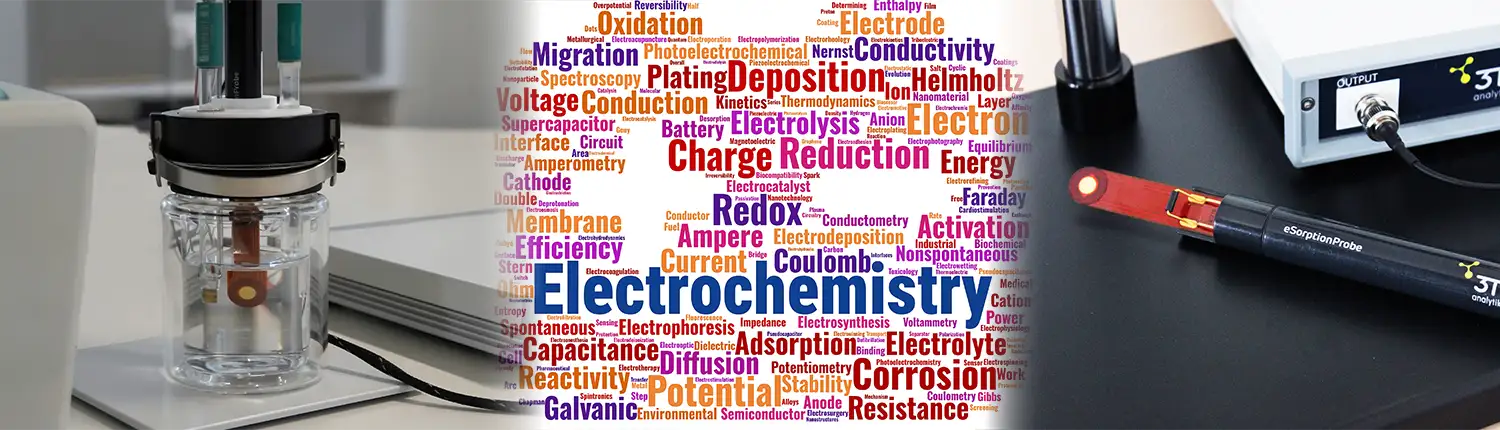
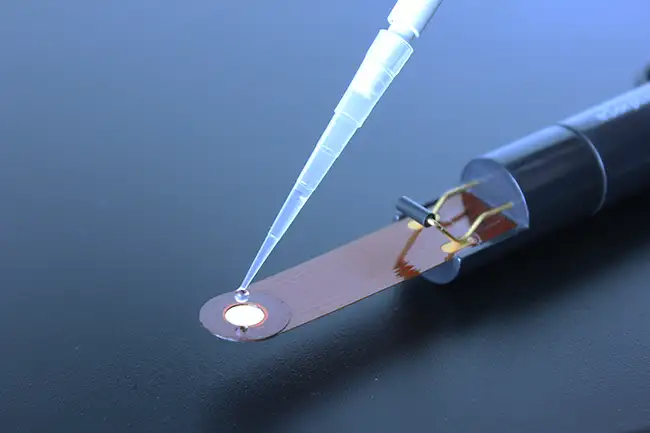
The new eSorption Probe enables direct immersion into a liquid sample or pipetting of small droplets onto a sensor surface without the need for flow cells or pumps and allows fast and effortless QCM/QCM-D measurements in static mode.
Study Mass, Thickness, Kinetics, Rigidity and Smoothness
Redefines and Expands Scope of QCM-D Surface Analysis
Effortless Handling and Efficient Operation
High-Sensitivity Multi-Harmonic Readout
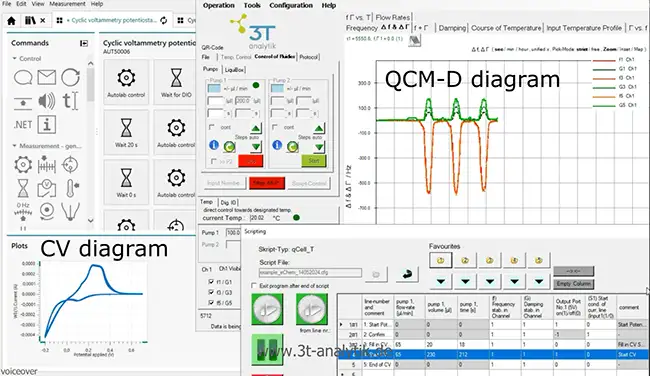
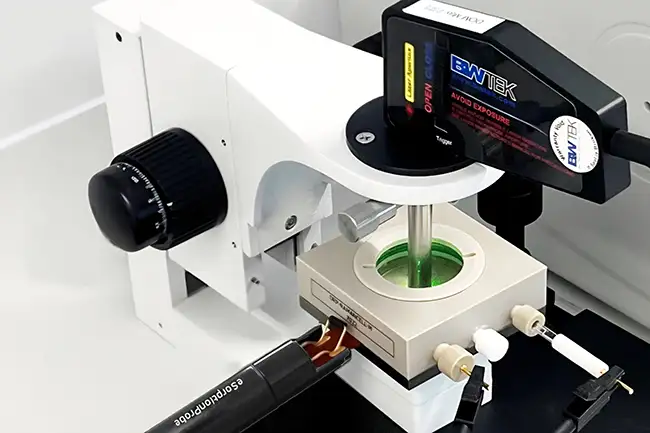
Combine with Electrochemistry, and Raman Spectroscopy in Real-Time on a Single Surface
Controlled Layer-by-Layer and Dip-Coating Analysis
The eSorption Probe enables direct, real-time monitoring of layer-by-layer and dip-coated films. These processes are often challenging in conventional QCM/QCM-D systems due to flow-cell clogging and tubing contamination. Unlike deposition via flow cells, the cavity-free, direct-immersion design allows films to be formed and measured under conditions that closely reflect true dip-coating workflows. It effectively bridges laboratory analysis with production-relevant development. Optimises dip-coating processes for:
– functional and protective coatings
– optical films
– biomedical surfaces
– membranes
– nanostructured layers
Expands the Scope of Surface Analysis
Easy to hyphenate with:
– Raman spectroscopy
– contact angle measurements
– optical microscopy
Integrates into Standard Electrochemistry
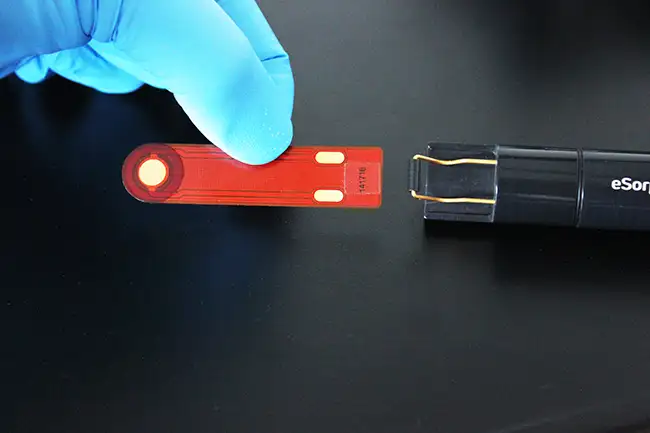
When combined with a potentiostat, it functions both as a mass sensor and working electrode in EQCM-D experiments, operating alongside the standard reference and counter electrodes in conventional electrochemical cells. Vertical insertion allows gas bubbles to escape freely, minimizing interference and providing:
− High-performance EQCM-D with a simplified, research-ready setup
− Bubble-free, stable measurements via cavity free probe design
− Seamless integration into flow-cell and hybrid systems
− Integrated cable connectors for QCM-D readout and electrochemical (WE) measurements
Small Sample Volume enables QCM-D measurements with volumes as low as 50 μL via pipetting
Other Features include:
– Available with a wide range of sensor coatings, including Au, Cu, Pt, Ag, and Pd, to suit diverse experimental needs.
– High Sensitivity & Viscoelastic Insight: 10 MHz sensors provide ~4× higher mass sensitivity than 5 MHz sensors. Simultaneous frequency and damping readout at 10, 30, and 50 MHz harmonics enables viscoelastic modelling of soft films and interfaces.
– Integrated Software Workflow: Fully controlled via NOVA and qGraph, with synchronized QCM-D and electrochemistry data visualized in qGraphViewer and easily exported to Excel, Origin, or SigmaPlot for further analysis.